Sunday, July 13, 2014

Duranta erecta aka Sky Flower, Golden Dewdrop, and Pigeon Berry

With its lush green leaves,
 its delicate purple/blue flowers which smell of chocolate and licorice, 
and its peach colored berries,
Duranta and rose, a pretty pair.
duranta is a favorite shrub of mine. 
Duranta erecta is a top performer in my yard. I live in the Los Angeles area (zone 10) and it grows rapidly each year to 15 ft tall and 10 ft wide. It tends to grow in a round habit with multiple stems. I prune it once in the late summer to try to keep it around 7 ft high and wide. The picture above was taken yesterday and I would guess it is about 10 ft tall. 

I understand that in colder climates it can be grown as an annual in the garden or containers. Planted in the spring it will grow to 5 ft tall if grown as an annual. 

In zones 10 and 11 it can be planted in the ground as an evergreen shrub which flowers in the late spring and summer. The flowers are small and hang in clusters from delicately drooping stems much like wisteria with flowers at the top, buds at the bottom. Many of these clusters will form on one stem.
Then in the fall and winter the flowers become waxy peach berries which remain all winter and into the next spring.
Taken in April, the rose and duranta are perfection together.
Unfortunately I don't have a picture of the plant when it has both berries and blossoms so you'll have to trust me when I say the colors look lovely together.

The flowers have a sweet fragrance that attracts not only me but the hummingbirds and butterflies love them too. Every year I have hummingbirds that nest in a large magnolia tree near the duranta. I would nest there too if I were a hummingbird. 
The twins, hummingbird babies in the magnolia May 2012.
The shrub prefers moist soil and sun but it is adaptable and can tolerate partial shade and drier conditions as well. I have 2 of them, one is in the shade of the magnolia so it gets dappled sun and water from the sprinklers so it is moist. The other one is in full sun in a drier location. Clearly the one in the moist shady area is more lush with larger leaves. It's the one shown above and grows long branches, adding several feet of height over the summer. The one in the sunny drier location grows to 8 ft tall and stops growing so it is easier to manage.

One of the things I love about the shrub is that birds tend to nest in it. Yesterday I counted 3 nests tucked away in its branches.
This is a plant which is delightful up close. Plant it where you can appreciate the details of the small flowers and close enough to take a sniff. The fragrance is delicious. 

Do be careful as the berries are poisonous and it has long thorns.
Mean thorns!
One year I was pruning it and was bending the branches to break them into pieces. In the process a thorn went straight into my nail and broke off. It went half way through my middle finger. OUCH. The thorns are easily an inch long. You have been warned.

But back to how pretty it is...


Thursday, July 10, 2014

My Heart is Filled with Sunshine

My daughter came to visit me in the garden yesterday. If not in person, at least she appeared in my heart. Funny how something as simple as a child's Valentine can fill a mom's heart to the point of bursting. 

Missing her is a constant reminder of how lucky I am to have the special bond I'd always dreamed of having with a daughter. We are kindred souls. She is my Sunshine, a nickname that describes her perfectly. She's living in another city, creating a fabulous life and career near the beach, and I miss her. 

My garden is one way I am coping with my kids growing up. I find it's best to keep busy.

I keep a stack of envelopes handy in the garden to store seeds I harvest. 
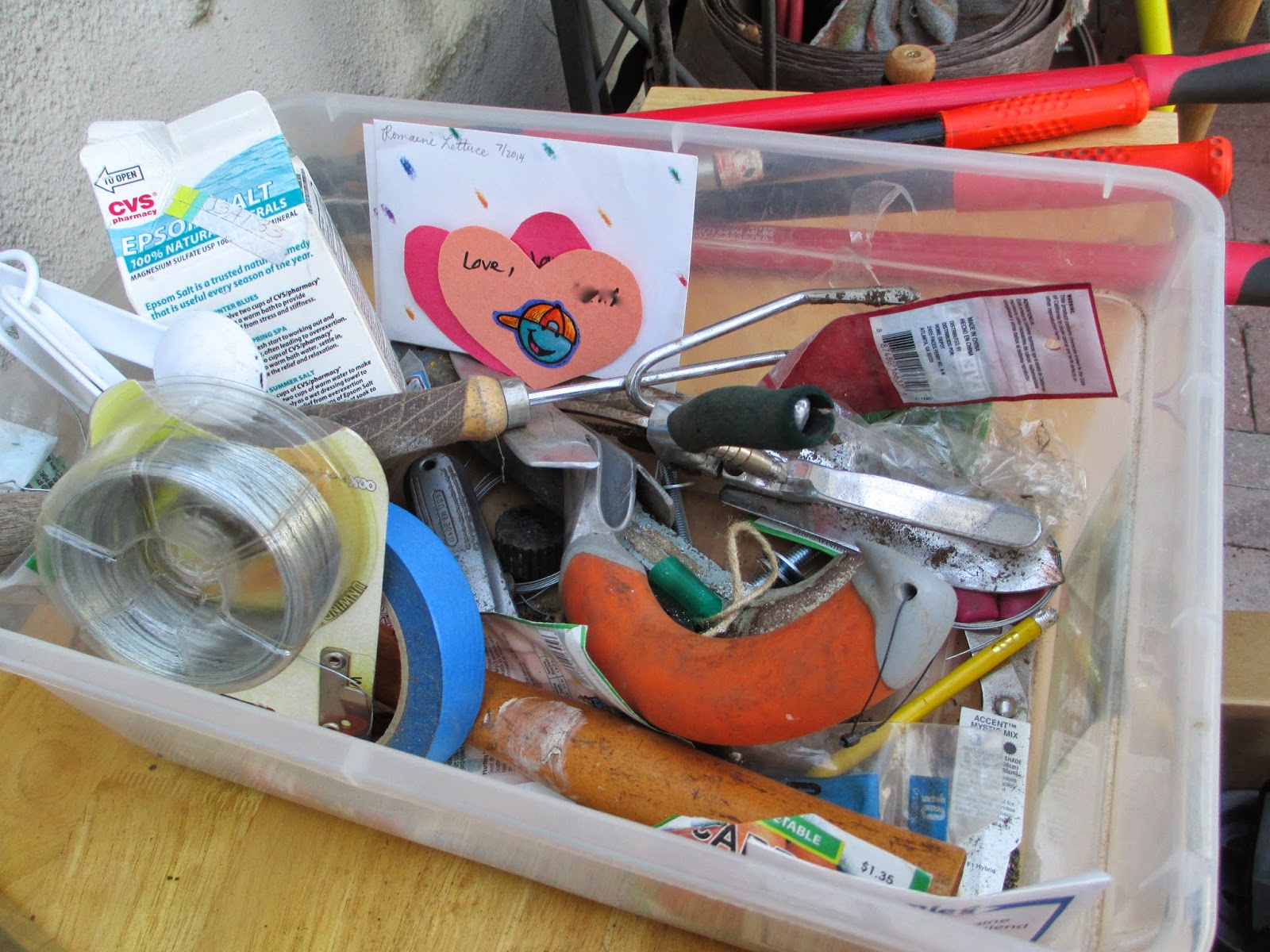
These are old envelopes which were in a desk drawer for years before making their way to the garden. Yesterday when I was collecting lettuce seeds I came across a sealed envelope in the stack. Holding it up to the light I could see it held a heart. 

It turns out there were a few sealed envelopes which I couldn't wait to tear open. 

And that's when my heart suddenly overflowed with love for that little girly girl/tomboy who made these Valentines. Memories came flooding back of her with her bright smile, baseball cap turned backward, hair hanging loose because she had no desire for hair clips of any kind. 

Creative, loving, industrious, cool, a true friend, and there she is, represented in a child's handmade Valentines.

What a treat it was to find these, they made my day. I'll keep them in my garden box.

They will bring Sunshine to my garden even on a cloudy day, at least in my heart.


Wednesday, July 9, 2014

Collecting Seeds for Next Year's Harvest

Lettuce seeds come in tidy packages or atop a towering plant.  
Striving to be more self-sufficient I am determined to collect seeds for next year's garden. My vegetable garden is only in its second year and last year it didn't occur to me that it would be a good idea to let some plants go to seed so that I could collect the seeds. The light went on this spring when I had to buy more seeds. This year I am well on my way to having a nice seed collection for next year.

One of the things I love about gardening is the structure of the plants. I knew that lettuce would bolt (meaning it would quickly grow tall and produce flowers then seeds). I just didn't realize how tall it would become. These Romaine lettuce plants are flowering at 4.5 feet tall. 
The yellow flowers are small but numerous. 
They morph into fluff balls of seeds similar to dandelions.
Each plant is loaded with blossoms so in the future I will only let one plant of each variety go to seed. To leave more than one of each variety is not needed and the extra plants will just be pulling nutrients from the soil as they bolt, so one is enough.

I found that collecting the lettuce seeds was easy. I just pinched off the fluff balls and placed them in my palm.
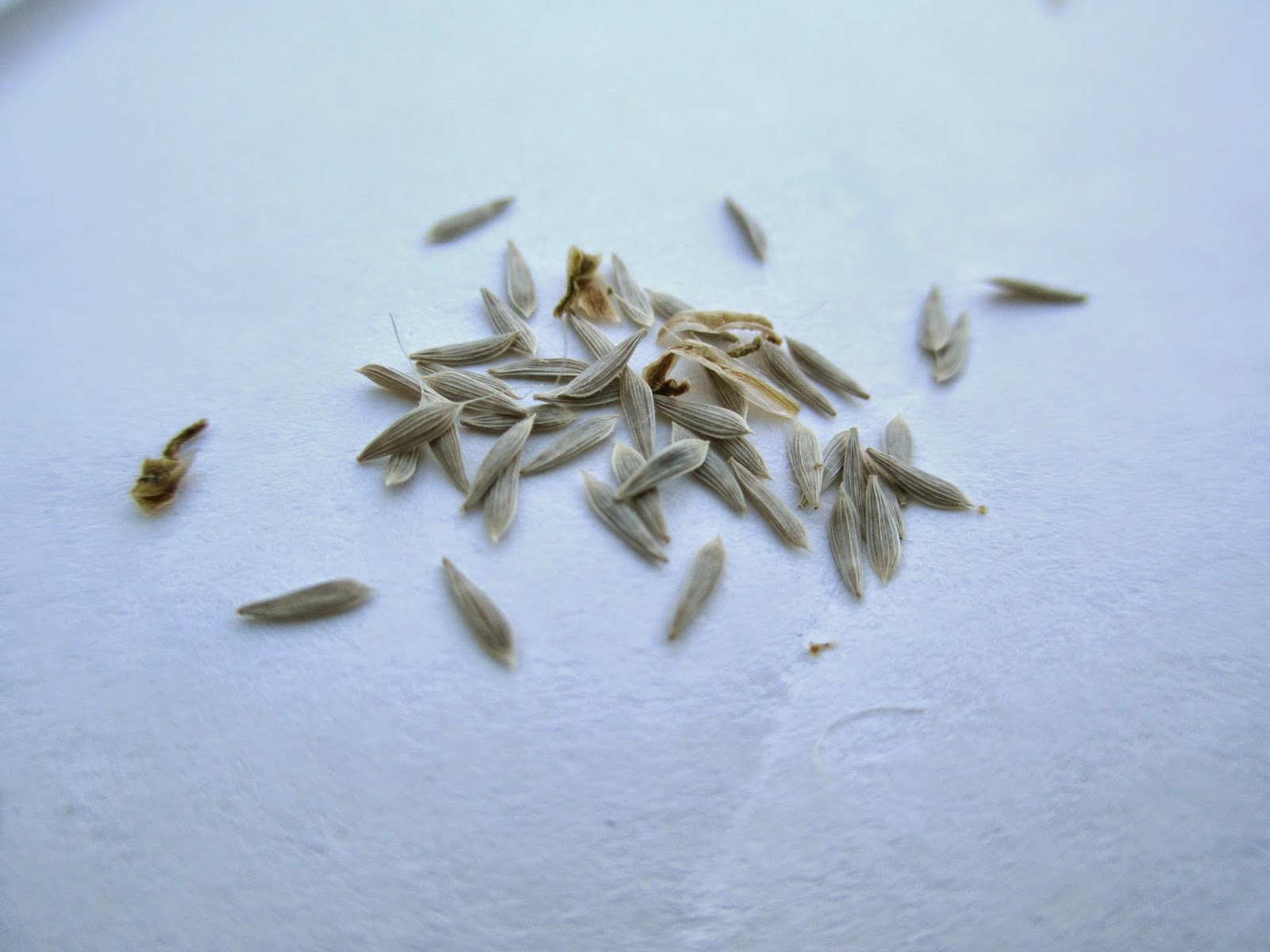
Then I blew gently to blow away the white fluffy part leaving the heavier seeds behind.
These Romaine seeds are put in an envelope, sealed and labeled, ready for my winter garden.


Tuesday, July 8, 2014

Ichiban Eggplant's Knobby Knees

Ichiban eggplant is a fascinating plant. Early in the season, the velvet texture of the leaves beckoned gentle touches. 

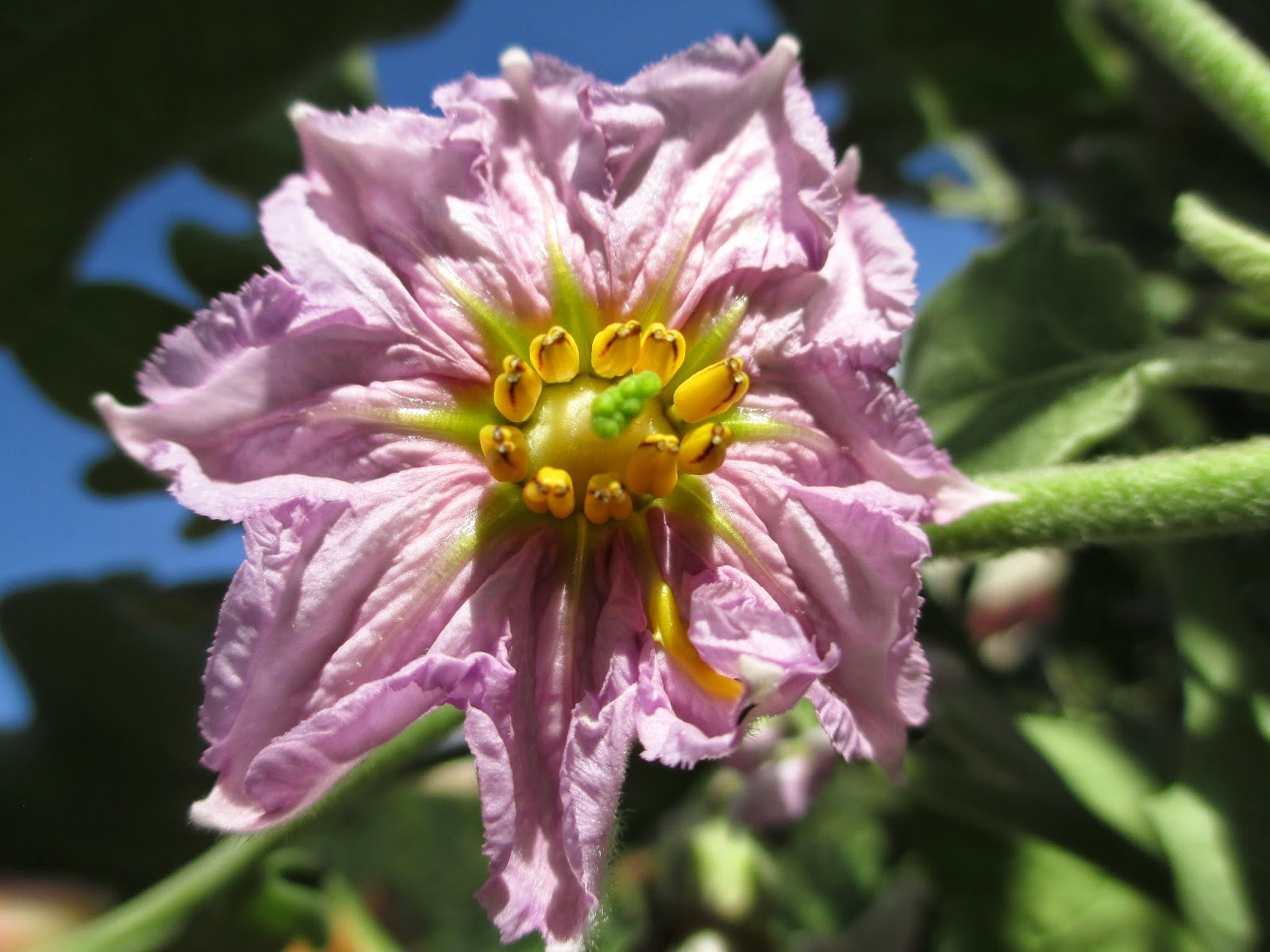
I can't think of a vegetable with prettier flowers than the eggplant.
Ichiban eggplant blossom.
"Black Beauty" eggplant blossom.
Now that the plant is large, I am struck by the structure. 

The eggplants are suspended from a stem which appears far too spindly to support the weight. That stem amazingly extends outward, remaining nearly horizontal, in a gravity-defying display. 
To my physical therapist's eye, it looks like a thigh with two knobby knees attached, sitting in the air. From the knobby knees, if you follow the line of the lower legs downward, you come to the purple elf shoes with upturned toes. 

Luckily for these elves, their shoes need no polish, the shine is brilliant! Love your socks, girl.

Being the delightful plant that is it, the ichiban eggplant elf shoes can dance. When the shoes are bumped they do indeed swing from those knobby knees. 

To me it is incredible the way the plant allows the eggplants to swing without breaking the stem. 

Our plant is loaded, and the time is drawing near that we will be harvesting our first ichiban.


Monday, July 7, 2014

Keeping Up with Garden Chores - My 30 Minute Garden Tour with my Trusty Bucket

Most days I'm lucky to find 30 minutes to tend the garden so it's important to be organized to make to most of my time. I keep this bucket near the entrance to my garden. It holds the essentials such as gloves, kneeling pad, hand tools, clippers, wire and twine, seeds, garden tags and a pencil. I pick it up and carry it with me as I take my daily tour so I have the tools I need at hand to do my garden chores as I move through the garden.

I'm looking for signs of distress/disease like this leaf with powdery mildew. I prune as I go, removing diseased leaves from plants as well as fallen leaves. One of the best ways to prevent the spread of disease such as powdery mildew is to simply remove the diseased leaves.
I'm looking for weeds too. I find that if I pick the weeds when they pop up, I can keep ahead of them. This one has to go.
Having the wire and twine handy makes taming the tomatoes easy. I add a little extra twine to support the vines to control their growth before they fall over.
Another little chore I try to do daily is deadheading, or removing seeds pods, which encourages plants to continue to produce. Here is my Thai basil which has created these lovely purple seed pods. These seeds I picked and saved in an envelope to be planted at another time. 
I'm also looking for pests such as aphids. I have a hand sprayer filled with soapy water which I also keep in the bucket so I spray aphids as I make my daily tour. Those little guys are such a problem this time of year, and I find that soapy water works best to kill them.

I find that keeping these items handy in the bucket saves time making trips back and forth to the garage. Taking the tour then going back to weed or prune is more time consuming than taking the tour and doing the chores the first time through. I make mental notes of other chores that need to be done at a later time when I have more than just a few minutes. 

With our busy schedules, making the most of our time in the garden is important. It's that time of year when tending the garden can be overwhelming because things are growing and changing so quickly. This is my way of trying to stay ahead of the game so that the garden doesn't become a jungle.


Tuesday, July 1, 2014

DIY Cork Garden Tags

"Delightful" is my new plumeria.
Here's my idea for making garden tags. Take a wine cork (my husband loves his wine so we have plenty), write the plant's name in permanent marker and stick a piece of wire into in. There you go...a durable garden tag.
"Sunshine Blue" blueberry


Monday, June 30, 2014

Plumeria "Delightful" - I Think I'm in Love

It was love at first sight. All plumeria flowers are pretty but this one captivated me. Its name is "Delightful" and it is. Darker pink buds unwind to reveal petals rimmed in pink which fade to white with yellow centers.
And the fragrance is heavenly; sweet and spicy with a hint of lemon. The scent runs away from you. It's strong at first but quickly fades as you sniff the aroma. It leaves you wanting more. Like eating potato chips, you can't have just one. So you remain, taking sniff after sniff.
Plumeria are tropical trees with thick stems, large leaves and clusters of waxy fragrant flowers. They are common in Hawaii and their flowers are often used in leis. In the right environment the trees can grow to 30 ft tall but some varieties are smaller. In my Southern California area they are deciduous, losing their leaves in the winter. They prefer full sun but can take some shade. Well drained soil is important. Water deeply then let the soil dry out a bit between waterings. They do not like soggy soil. Decrease your watering frequency during fall, and stop watering them in winter. Then in the spring when the new growth appears, resume watering. In the spring give them a high nitrogen fertilizer then switch to fertilizer that is high in phosphate. Feed them every few weeks then stop giving fertilizer in Sept as the plant prepares to go dormant.

The best way to propagate plumeria is through cuttings. I visited a woman last week who has a jungle of white plumeria trees in her backyard. She started with one tree and each time she pruned it, she stuck the clippings in the ground. She said she watered them every few days and about 2/3's of the cuttings took root and grew. Her advise was, "Stick it in the ground and leave it alone." She does not fertilize hers and they are gorgeous. I guess her soil already has whatever it is that the plants need because stepping into her yard is like going to Hawaii without the crowded airport hassle.

I have wanted to add a plumeria to my garden for years. They can be very expensive especially for a mature, multi trunk tree. Knowing that young trees may not bloom for a couple of years, I was looking for a plant with multiple branches, and one that was in bloom.
My "Delightful" plumeria replaced my milkweed which became an aphid apartment building.
Then I found my little one which has my favorite flower colors, pink and yellow. One sniff and I was in love. Lucky for me, it was on sale so it was meant to be. She is delightful.